
As a maker, I love to burn some incense every so often to help me focus or set the correct mood. However I’ve always had a love-hate relationship with it because, while I love the ritualistic aspect, the incense holders I’ve had never seem to do the one job they were made for, whether they were store bought or one of the many 3D printed designs available freely.
Follow me on my journey to designing a better incense holder that is quick to print and actually keeps the ash in one place instead of several!
AI is not involved in my process
Why So Serious?
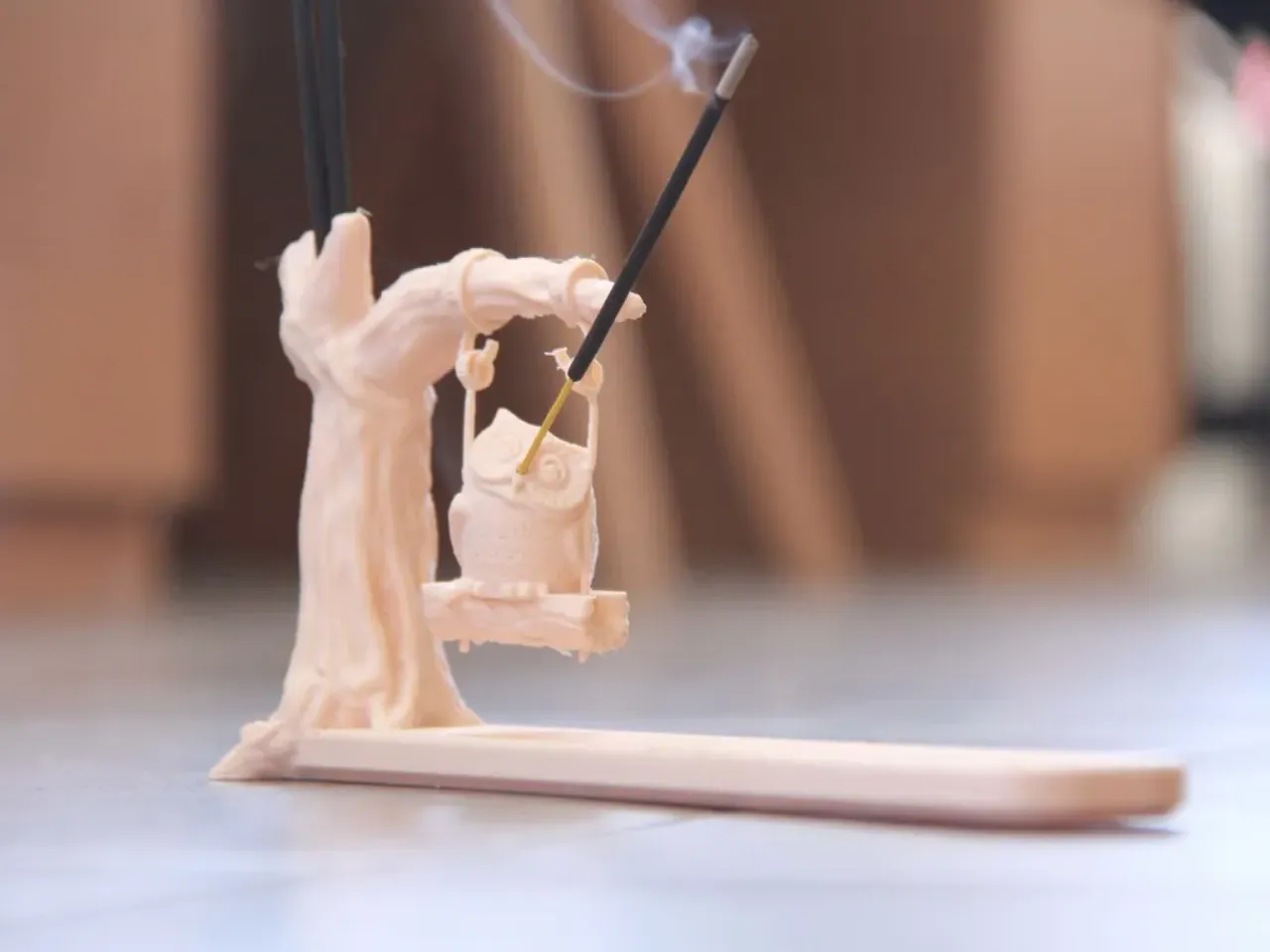
My number one gripe with most incense holders is that they only ever seem to come in two basic variants
The Long Ones
The Little Bowls
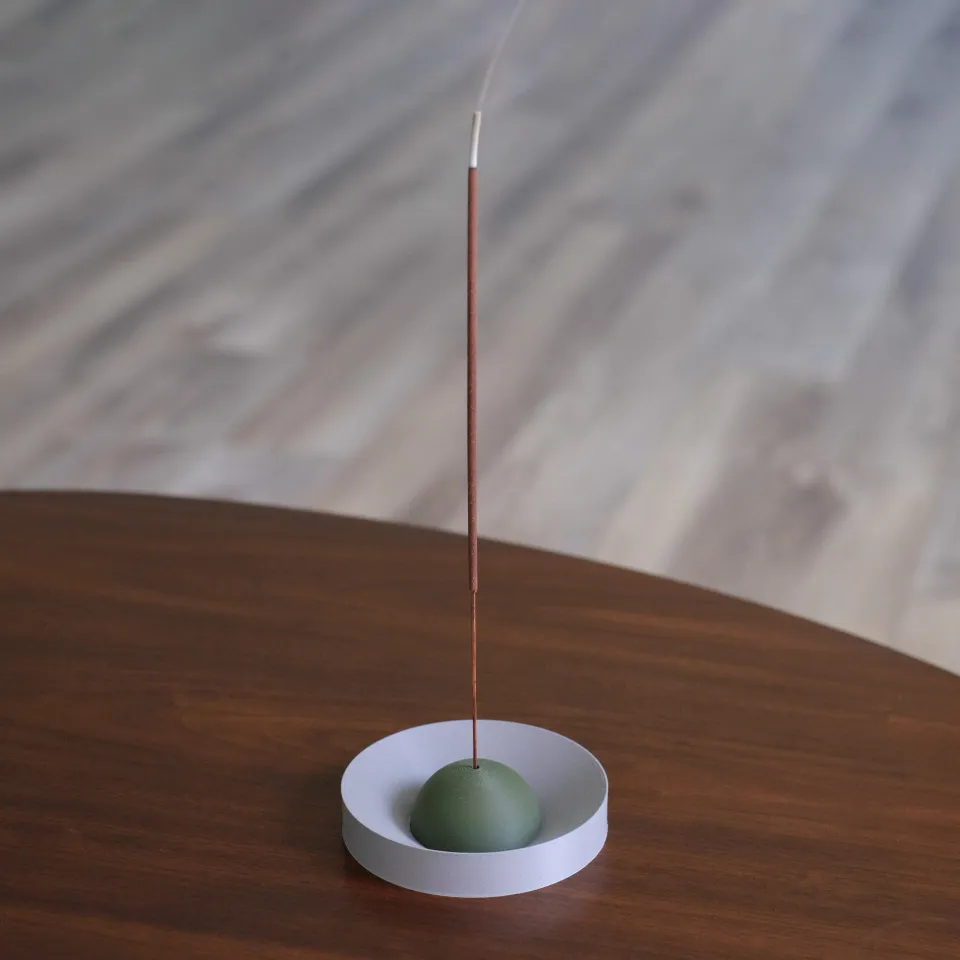
My issue here is that, with a small misplacement of the incense stick, or a slight cross-breeze, both of these designs still allow ash to get thrown absolutely everywhere. I’m probably exaggerating a little, but it’s certainly frustrating to have an item specifically for a task that it fails to do adequately.
Traditionally manufactured designs do have a bit more variation and a search for an “incense tower” provides results that are a lot closer to what I’m looking for, but in the end, I didn’t want to buy yet another “maybe”.
.png)
So instead I decided to use this mild inconvenience to fuel myself to design something better..
The Path to Improvement
Going into this, I had a very good idea of the basic requirements for the design
It needed to:
- Capture ALL of the ash
- Have adequate airflow
- Look good (blend into a room)
- Not need to be emptied every use
On top of that, it would be nice if it printed quickly but I was willing to compromise on that for a better design if needed.
I think it’s always best to start as basic as possible, and, to me, the most basic thing that fits my criteria would be a solid tube (to keep the ash in) that has holes all along the side (for the airflow) with a cap on either end, one to collect the ash and one to hold the incense stick. So that’s where I started!
I knew I didn’t want to just print a tube and some ends as that would take far too long without vase mode and be far too flimsy with it. Luckily, I’ve recently done a little exploration into using Vase Mode for Strong and Functional Parts so I had a good idea of how I could implement double wall vase mode for some added strength.
The remaining issue now was the holes or airflow, because I couldn’t just print a model like this in vase mode, due to the lack of a continuous outer wall for the slicer.
(1).png)
I was racking my brain for techniques to have gaps in a vase mode container when my mind flitted back to a random Reddit comment I’d seen. It had mentioned utilising bridging in vase mode and it all suddenly clicked into place! With that sorted, the rest was pretty straightforward so I started designing around those constraints. And realistically, what you’ll see is after quite a few iterations and day to day testing.
The Final Parts
The Lid
.png)
This is the simplest part of the holder and is going to be the “top cap” that I described in the basics. It’s got tapered holes on the bottom to hold the ends of incense sticks and some indents in the top to grip the lid and remove it.
While it has a ton of holes, the incense holder itself is only designed to be used with one incense stick at any given time. This is purely because 3D printing plastic usually cannot take the amount of heat produced by even two sticks, in my experience
Slicing
.png)
It can be printed with your default printer settings and I’ve personally gone as low as 5% infill and my printer’s largest line height.
The Ash Catcher
.png)
This is the “bottom cap” of the basics that I originally described and will serve the purpose of both, making sure all the ash is collected in one convenient place and giving you a pretty decent number of reuses without needing to empty it. I’ll always recommend emptying it often as you also don’t want it piling up too much.
It’s designed to make use of the double wall vase mode that I described earlier (find out more here) which makes it relatively strong and quick to print. The ash catcher just compressions fits onto the body and somewhat snaps along the vase mode layer lines for a pretty secure fit.
Slicing
.png)
This, as mentioned, is to be printed in vase mode at a 0.4mm line width, which the slicer should automatically print as a double wall vase mode part.
The Body
.png)
Now this is the main piece of the incense holder and took the most time to figure out! The body serves the purposes of keeping all the ash in and making sure airflow remains good and it does so by making use of: bridging, double wall vase mode & a special spiral cut for the best results.
Double Wall Vase Mode + Spiral Cut
I’m not going to go too deep into the methods for double wall vase mode, as I’ve explored that in more depth here, but I’ve paired that technique with a spiral cut along the body, instead of the straight vertical cut discussed in the original exploration, for this part. The spiral has a very particular pitch and end points, such that the cut lands exactly on the points of contact between each section. This, as opposed to the straight cut, means that there are never any seams on the overhangs, making for a much stronger and better looking part.
Bridging
.png)
The second part of this design, shown by the highlighted area, is the bridging over air to create the holes in the surface for airflow. In my experience, there’s very little droop and the gradual build to quite a wide opening makes for a very good airflow path. Multiply that by the number of holes in the whole part and I’m pretty happy with the end result!
Slicing
.png)
This, same as the ash catcher, is to be printed in vase mode at a 0.4mm line width, which the slicer should automatically print as a double wall vase mode part.
Extras
Wall Mount
.png)
As a final bonus, I made up a 2-part wall mount that just friction fits together and uses VHB tape on the back to stick to the wall. The tape helps keep the mount strong but renter friendly and the incense holder as a whole is relatively light so I didn’t spend too much time overengineering this part.
Versions
The incense holder comes in 2 Variants, with 3 Sizes each The main change between the versions are to the body, namely the thickness of the sections that make up the body and the diameter of the body. The smallest size is not recommended if you’re printing in PLA because I’ve had it melt on me when the incense stick isn’t perfectly straight and the largest size might be a bit big for some people.
I personally go for Thick/Medium for my own prints. Download Link
| Size/Variant | Thick | Thin |
|---|---|---|
| Large | .png) | .png) |
| Medium | .png) | .png) |
| Small | .png) | .png) |
Warnings
DO NOT have more than one incense stick in the holder at once! This WILL burn the holder as 3D printing plastics often cannot take these temperatures! I know some people may have concerns that PLA won’t hold up, but I have been using size medium and up, personally, and it’s held up for months of consistent use. I’ll make sure to make an update if this changes though!
Print Time
So how long did this end up taking me to print? Here are the results on my work hardened Ender 3 V2
| Part | Print Time |
|---|---|
| Lid | 1h 31m |
| Ash Catcher | 1h 43m |
| Body | 4h 44m |
| Wall Mount | 2h 10m |
| Total | 10h 8m per Incense Holder |
Admittedly, that is quite a long total print time, but it’s a compromise I’m personally more than happy to make for this design!
Conclusion
Let me know if you print any of these models and how your experience went! Most importantly, please remember to use with care, as fire still burns and there’s nothing I can do to design around that. Also, don’t forget to follow or subscribe for future content!
You can also join my Patreon for free to access the original download files for the models and get access to future content up to a week early!